Vietnam has emerged as a pivotal player in the global supply chain, a transformation that has been years in the making but has accelerated dramatically in recent times. The Southeast Asian nation, once overshadowed by manufacturing giants like China, is now reaping the benefits of a significant shift in global trade dynamics and corporate strategy. This evolution is not merely a story of low-cost labor, but a complex narrative involving geopolitical maneuvering, strategic investment, and a concerted national effort to position itself as a reliable and competitive manufacturing hub.
The story begins with China's decades-long dominance as the "world's factory." For years, multinational corporations flocked to China for its vast labor pool, established infrastructure, and efficient export logistics. However, rising labor costs, increasing tariffs from trade tensions, particularly with the United States, and a desire for supply chain diversification have prompted companies to look elsewhere. This search for alternative manufacturing bases, often termed the "China Plus One" strategy, has been a primary catalyst for Vietnam's ascent.
Vietnam was uniquely positioned to capitalize on this shift. The country shares a long border with China, facilitating easier supply chain integration and logistics for companies already familiar with operating in the region. Furthermore, the Vietnamese government has been aggressively proactive. It has pursued a series of ambitious free trade agreements, including the Comprehensive and Progressive Agreement for Trans-Pacific Partnership (CPTPP) and the EU-Vietnam Free Trade Agreement (EVFTA). These agreements significantly reduce tariff barriers for Vietnamese exports, making the country an incredibly attractive base for companies aiming to access key markets in Europe, North America, and the Asia-Pacific region.
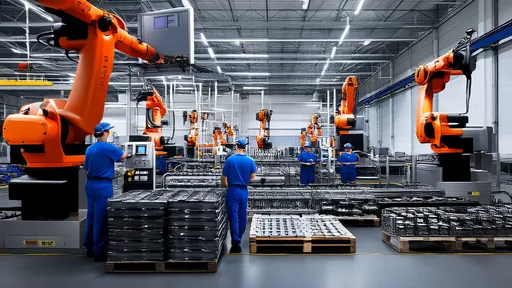
Foreign direct investment has poured into the country, fueling its industrial growth. Giants from the tech world, such as Samsung and Intel, have established massive production facilities in Vietnam. Samsung, for instance, now produces over half of its global smartphone output in the country. This is not limited to electronics; apparel and footwear manufacturers like Nike and Adidas have also shifted substantial portions of their production to Vietnamese factories. This influx of high-profile investment has created a powerful ripple effect, fostering the development of a robust domestic supporting industry and elevating the overall skill level of the Vietnamese workforce.
The benefits for Vietnam are multifaceted and profound. Economically, the manufacturing boom has been a primary engine of growth, consistently contributing a significant portion to the nation's GDP. This has led to rapid urbanization, the creation of millions of jobs, and a notable rise in average incomes, lifting countless citizens into the burgeoning middle class. The societal transformation is visible in the skyline of cities like Hanoi and Ho Chi Minh City, where modern infrastructure projects and a growing consumer economy reflect the newfound prosperity.
On the global stage, Vietnam's role has been fundamentally upgraded. It is no longer seen as just a source of cheap assembly but as an integral and sophisticated node in complex international supply chains for high-value goods. The country has demonstrated a remarkable ability to move up the value chain, transitioning from simple textile assembly to the manufacturing of intricate electronics and components. This enhanced reputation for quality and reliability has made it a trusted partner for the world's most demanding brands.
However, this rapid growth is not without its significant challenges. The very infrastructure that supports this economic miracle is now straining under its weight. Ports, roads, and power grids require massive upgrades to handle the increasing volume of trade. While the workforce is young and motivated, there is a growing need for more highly skilled engineers and technicians to support advanced manufacturing, creating a skills gap that must be addressed through education and training reforms.
Furthermore, Vietnam's success has placed it under greater international scrutiny. Compliance with international labor standards and environmental regulations is becoming increasingly important to global consumers and investors. The country must balance its relentless pursuit of economic growth with sustainable practices and improved working conditions to maintain its competitive edge and positive international image. Rising domestic wages, while a sign of success, also threaten to erode the low-cost advantage that initially attracted manufacturers.
Looking ahead, the future for Vietnamese manufacturing is bright but requires strategic navigation. The global pandemic and recent disruptions in global logistics have only underscored the importance of supply chain resilience, a quality Vietnam has in abundance. To secure its position for the long term, the country must continue to invest heavily in its infrastructure, deepen its supplier networks to reduce reliance on imported materials, and focus on innovation and value-added production. The goal is to evolve from being an alternative to China to becoming an indispensable and irreplaceable manufacturing powerhouse in its own right.
In conclusion, Vietnam's rise as a beneficiary of global supply chain变迁 is a testament to strategic geopolitical positioning, shrewd economic policy, and a relentless drive for development. It has successfully turned global economic upheaval into a historic opportunity. While challenges remain, the nation is firmly on a path to cementing its status as a central pillar of the global economy, proving that in the intricate dance of international trade, agility and foresight can yield extraordinary rewards.
By /Aug 29, 2025

By /Aug 29, 2025

By /Aug 29, 2025

By /Aug 29, 2025

By /Aug 29, 2025
By /Aug 29, 2025

By /Aug 29, 2025

By /Aug 29, 2025

By /Aug 29, 2025

By /Aug 29, 2025

By /Aug 29, 2025
By /Aug 29, 2025

By /Aug 29, 2025

By /Aug 29, 2025

By /Aug 29, 2025

By /Aug 29, 2025

By /Aug 29, 2025

By /Aug 29, 2025

By /Aug 29, 2025
By /Aug 29, 2025
