Investment Themes in China: High-End Manufacturing, Green Energy, and Consumer Upgrade

Aug 29, 2025 By

China's economic transformation continues to accelerate, with three distinct investment themes gaining significant momentum among global investors. The convergence of government policy support, technological innovation, and shifting market dynamics has created compelling opportunities in advanced manufacturing, green energy, and consumption upgrade sectors. These themes not only reflect China's current developmental priorities but also represent strategic areas where the country is positioning itself for global leadership.


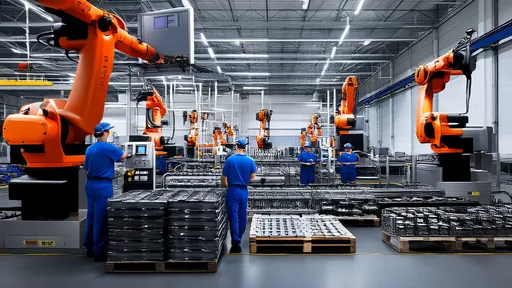
The advanced manufacturing sector has become a cornerstone of China's industrial upgrading strategy. Companies specializing in robotics, aerospace components, and precision machinery are experiencing unprecedented growth, driven by both domestic demand and export opportunities. The government's "Made in China 2025" initiative continues to provide substantial support through tax incentives, research grants, and infrastructure development. What makes this sector particularly interesting is the integration of artificial intelligence and Internet of Things technologies into traditional manufacturing processes, creating smart factories that operate with remarkable efficiency.


International investors have taken notice of the sophistication emerging in Chinese advanced manufacturing. Rather than competing solely on cost, these companies are increasingly competing on technology and quality. The supply chain advantages developed over decades, combined with recent technological breakthroughs, have positioned Chinese manufacturers as critical partners in global value chains. From semiconductor equipment to medical devices, Chinese firms are moving up the value chain at an impressive pace.


Green energy represents another transformative investment theme, reflecting China's dual commitment to environmental sustainability and energy security. The country has become the world's largest market for renewable energy installations, with massive investments flowing into solar, wind, and hydropower projects. Beyond generation, significant developments are occurring in energy storage solutions, smart grid technologies, and electric vehicle infrastructure. The scale of China's green energy ambitions is staggering, with projects that often dwarf comparable initiatives in other countries.


The transition toward renewable energy is creating numerous investment opportunities across the value chain. Chinese solar panel manufacturers continue to dominate global markets while constantly improving efficiency and reducing costs. Wind turbine producers are developing increasingly sophisticated offshore wind solutions. Perhaps most notably, China's battery technology companies have become world leaders, supplying energy storage solutions and electric vehicle batteries to markets worldwide. This leadership in green technology represents a strategic advantage as global demand for clean energy solutions accelerates.


Consumption upgrade represents the third major investment theme, driven by China's growing middle class and their evolving spending patterns. As disposable incomes rise, Chinese consumers are shifting their spending from basic necessities toward premium products and experiences. This trend is evident across multiple sectors including education, healthcare, travel, and luxury goods. Companies that can successfully cater to these upgraded consumption preferences are experiencing strong growth and premium valuations.


The digital transformation of retail and services has accelerated this consumption upgrade trend. E-commerce platforms have made premium products accessible to consumers across China, while social media and live streaming have created new channels for brand discovery and engagement. What's particularly interesting is how Chinese consumers are increasingly valuing quality, authenticity, and brand story over mere status signaling. This sophistication presents both challenges and opportunities for consumer brands operating in the Chinese market.


These three investment themes are interconnected in fascinating ways. Advanced manufacturing capabilities enable the production of sophisticated renewable energy equipment. Green energy infrastructure supports sustainable economic development. Rising incomes from industrial upgrading drive consumption patterns. This virtuous cycle creates a strong foundation for continued growth across all three themes.


Market analysts observe that companies operating at the intersection of these themes often demonstrate particularly strong performance. For instance, electric vehicle manufacturers combine advanced manufacturing capabilities with green energy technology while benefiting from consumption upgrade trends as consumers transition to premium transportation solutions. Similarly, smart home appliance companies incorporate advanced manufacturing and energy efficiency features while catering to consumers' desire for upgraded living standards.


The regulatory environment continues to evolve in ways that generally support these investment themes. Policy makers have demonstrated consistent commitment to industrial upgrading, environmental protection, and domestic consumption growth. While regulatory changes can create short-term volatility, the long-term direction remains clearly supportive of these strategic priorities. Investors who understand this policy context can better navigate the occasional regulatory adjustments that occur.


Global macroeconomic factors also influence these investment themes, though often in complex ways. Trade tensions have accelerated China's focus on technological self-sufficiency in advanced manufacturing. Climate change commitments have intensified the push toward green energy. Pandemic-related disruptions have highlighted the importance of domestic consumption stability. These external pressures have, in many cases, strengthened rather than weakened the case for investing in these thematic areas.


Looking forward, these investment themes appear well-positioned for sustained growth. The structural drivers behind each theme remain intact, supported by demographic trends, technological advancement, and policy priorities. While individual companies within these sectors will undoubtedly experience varying degrees of success, the overall direction of travel seems clear. China's economic transformation continues to create compelling opportunities for investors who understand these fundamental shifts.


As with any investment theme, risks remain. Technological disruption, regulatory changes, and competitive dynamics can affect individual companies and sectors. However, the breadth and depth of these thematic trends suggest they represent more than temporary market phenomena. They reflect fundamental changes in China's economic structure and development model that will likely continue to shape investment opportunities for years to come.


For investors seeking exposure to these themes, multiple approaches exist. Some may choose to invest in individual companies that exemplify these trends, while others may prefer sector-focused funds or ETFs. Still others might look for companies that provide enabling technologies or services to these thematic areas. Regardless of the approach, understanding the underlying dynamics and drivers of each theme remains essential for successful investment decision-making.


The evolution of these investment themes will undoubtedly continue to present both challenges and opportunities. Technological innovation will create new sub-sectors while potentially disrupting existing business models. Policy priorities may shift emphasis within and between themes. Global market dynamics will influence export opportunities and competitive landscapes. Yet the fundamental strength of these thematic areas seems likely to endure as China continues its economic transformation journey.



Recommend Posts
Finance

Brands Going Global: From Made in China to Brands of China

By /Aug 29, 2025

In the global marketplace, a quiet revolution is underway as Chinese consumer brands increasingly make their presence felt beyond domestic shores. This shift represents a fundamental transformation from the era of "Made in China" to the emerging age of "Created in China," marking a significant evolution in how the world perceives Chinese products and innovation.
Finance

Global Barbell Strategy: Seeking Balance in an Era of Fragility"

By /Aug 29, 2025

In an era defined by volatility and uncertainty, the concept of the "Global Barbell Strategy" has emerged as a compelling framework for navigating the complexities of modern life. This approach, borrowed from investment theory and adapted for broader application, advocates for a balanced yet dynamic method of managing risk and opportunity. At its core, the barbell strategy involves allocating resources to two extremes—high safety and high risk—while avoiding the middle ground, which often represents mediocrity or unseen vulnerabilities. As societies and individuals grapple with geopolitical shifts, economic fluctuations, and technological disruptions, this philosophy offers a pathway to resilience without sacrificing growth.
Finance

Brazil and the Latin American Market: Rebalancing Resources and Demand

By /Aug 29, 2025

Brazil and the broader Latin American region are currently navigating a pivotal economic transition, characterized by a profound recalibration of resource allocation and market demands. This rebalancing act is not merely a response to cyclical economic pressures but reflects deeper structural shifts in global trade patterns, domestic policy reforms, and evolving consumer behaviors across the region.
Finance

Gold ETFs vs. Physical Gold: Which Investment Method is Superior?

By /Aug 29, 2025

In the world of gold investing, two primary vehicles have long captured the attention of both seasoned investors and newcomers alike: physical gold and gold exchange-traded funds (ETFs). The debate over which represents the superior investment choice is not merely academic; it strikes at the core of how individuals choose to preserve and grow their wealth in an often volatile global economy. Each avenue offers a distinct set of advantages and inherent challenges, shaped by factors ranging from tangible security to market liquidity and cost efficiency. Understanding the nuances between holding a gold bar in a vault and owning shares in a fund that tracks the metal’s price is crucial for making an informed decision that aligns with one’s financial goals and risk tolerance.
Finance

AI Investment: Diffusion from Hardware to Applications

By /Aug 29, 2025

The landscape of artificial intelligence investment has undergone a profound transformation over the past decade, evolving from a niche fascination into a cornerstone of global economic strategy. What began as a focused bet on computational hardware has rapidly diffused across the entire technology stack, creating a complex and interconnected ecosystem. This diffusion mirrors the journey of the technology itself, from the foundational silicon to the sophisticated applications reshaping industries. Investors are no longer merely backing chips; they are funding the future of how we work, live, and interact with the world.
Finance

India's Reform Acceleration: Investment Opportunities Forced by Tariff Pressure?

By /Aug 29, 2025

India’s economic landscape is undergoing a profound transformation, driven in part by mounting global tariff pressures and a strategic push toward self-reliance. Over recent years, the country has faced increasing external trade tensions, particularly with key partners like the United States and China, prompting a reassessment of its economic policies and industrial capabilities. This shift is not merely reactive; it represents a deliberate effort to reposition India as a global manufacturing hub and a more resilient player in the international arena.
Finance

Fund Investment: How to Choose Between ETFs and Actively Managed Funds?

By /Aug 29, 2025

The world of fund investing presents investors with a fundamental choice between two primary approaches: exchange-traded funds (ETFs) and actively managed mutual funds. This decision is far more nuanced than a simple binary selection, as it involves a deep understanding of one's own financial goals, risk tolerance, investment philosophy, and the specific market environment. Both vehicles offer distinct advantages and carry their own set of considerations, making the choice a highly personalized one that can significantly impact long-term portfolio performance.
Finance

The Magic and Practice of Compound Interest in Long-Term Investment

By /Aug 29, 2025

In the realm of personal finance, few concepts hold as much transformative power as compound interest. Often dubbed the eighth wonder of the world, its ability to turn modest, consistent investments into substantial wealth over time is nothing short of magical. Yet, for many, it remains an abstract idea, a mathematical curiosity rather than a practical tool for financial liberation. Understanding and harnessing this force is not just for the financially savvy; it is a fundamental pillar for anyone seeking long-term financial security and independence.
Finance

Home Insurance Configuration: Essential Protection Must Be Included

By /Aug 29, 2025

When it comes to securing your family's future, few financial decisions carry as much weight as the proper configuration of insurance. Many families view insurance as an obligatory expense—a line item in the budget to be minimized. However, this perspective overlooks the profound role insurance plays as the very bedrock of a sound financial plan. It is not merely a monthly premium; it is a promise of stability, a shield against the unforeseen storms that life can, and often does, unleash.
Finance

Investment Options for Individual Pension Accounts

By /Aug 29, 2025

As retirement planning takes center stage in financial discussions, the spotlight increasingly falls on individual retirement accounts and the pivotal role of investment choices. The landscape of pension investments has evolved dramatically, moving from traditional employer-managed plans to self-directed approaches that demand greater personal involvement. This shift places a profound responsibility on individuals to navigate the complex world of investment options, each carrying its own risk profile, growth potential, and alignment with retirement goals.
Finance

How to Manage Finances During a Rate Cut Cycle?

By /Aug 29, 2025

As central banks around the world pivot toward monetary easing, the financial landscape for everyday individuals undergoes a significant transformation. The shift into a rate-cutting cycle presents both unique opportunities and distinct challenges for personal wealth management. For the average person, understanding how to navigate these waters can make the difference between capitalizing on the environment or watching inflation erode purchasing power. This period demands a recalibration of financial strategies, moving away from approaches that thrived in high-interest environments and toward methods that leverage the new economic reality.
Finance

Asset Allocation Suggestions for Different Life Cycle Stages

By /Aug 29, 2025

Asset allocation represents one of the most fundamental decisions investors face, yet its implementation varies dramatically across different stages of life. The journey from early career through retirement demands not just different investment choices but fundamentally different philosophies about risk, time horizons, and financial objectives. Understanding how to adjust your portfolio through these phases can mean the difference between struggling to meet financial goals and achieving lasting security.
Finance

Investment Themes in China: High-End Manufacturing, Green Energy, and Consumer Upgrade

By /Aug 29, 2025

China's economic transformation continues to accelerate, with three distinct investment themes gaining significant momentum among global investors. The convergence of government policy support, technological innovation, and shifting market dynamics has created compelling opportunities in advanced manufacturing, green energy, and consumption upgrade sectors. These themes not only reflect China's current developmental priorities but also represent strategic areas where the country is positioning itself for global leadership.
Finance

Investment in Collectibles: The Financial Attributes of Artworks

By /Aug 29, 2025

In the hushed auction rooms of Christie’s and Sotheby’s, a subtle but seismic shift has been underway. The gavel falls not just for art lovers and collectors, but increasingly for financiers, wealth managers, and institutional investors. Art, long revered for its cultural and aesthetic value, is now being scrutinized through a different lens: that of a serious financial asset. This evolution in perception is redefining the very nature of collecting, transforming passion into portfolio strategy.
Finance

Asia-Pacific (Excluding Japan) Stock Markets: A Safe Haven" for Global Capital

By /Aug 29, 2025

In the ever-shifting landscape of global finance, investors are perpetually in search of stability and growth, often a challenging combination to find. While traditional powerhouses like the US and European markets grapple with inflation, geopolitical tensions, and fluctuating monetary policies, a distinct region has been steadily carving out a reputation as a bastion of resilience. Excluding its highly developed but often isolated neighbor, the Asia-Pacific ex-Japan equity universe is increasingly being viewed not just as a high-growth opportunity, but as a potential safe harbor for global capital.
Finance

Alternative Investments: Private Equity, Venture Capital, and Hedge Funds

By /Aug 29, 2025

The landscape of global finance has been profoundly reshaped over the past few decades by the ascendance of alternative investments. Once the exclusive domain of large institutional investors and ultra-high-net-worth individuals, assets like private equity, venture capital, and hedge funds have increasingly captured the attention of a broader investor base. This shift is driven by a relentless search for yield in a prolonged low-interest-rate environment and a desire for portfolio diversification beyond traditional stocks and bonds. The allure of these vehicles lies in their potential to generate substantial returns, albeit accompanied by a different risk profile and a distinct set of operational complexities.
Finance

Education Fund Planning for Children: Balancing Prudence and Growth

By /Aug 29, 2025

As parents, we all dream of providing our children with the best possible education—a foundation that will empower them to pursue their passions and build meaningful futures. Yet, behind this universal aspiration lies a complex financial challenge: how to save and invest wisely to fund these ambitions without compromising family security or future stability. Education costs have been rising at a pace that often outstrips inflation, making it imperative for families to approach education funding with both strategy and foresight.
Finance

European Industrial Revival: Sub-industry Leaders under Policy Support

By /Aug 29, 2025

Europe's industrial landscape is undergoing a profound transformation, driven by a combination of strategic policy initiatives and the resurgence of specialized market leaders. In the wake of global supply chain disruptions and increasing competitive pressures, the continent is witnessing a quiet but powerful renaissance across key industrial sectors. This revival is not merely a return to former glory but a reimagining of Europe's industrial identity for the 21st century.
Finance

Frontiers of Biotechnology and Medical Innovation Investment

By /Aug 29, 2025

The landscape of biotechnology and healthcare innovation is undergoing a seismic shift, driven by unprecedented scientific breakthroughs and a surge of strategic investment. Venture capital firms, pharmaceutical giants, and even non-traditional players are pouring billions into ventures that promise to redefine human health. From gene editing and personalized medicine to digital health platforms and AI-driven drug discovery, the fusion of technology and biology is creating a new paradigm in medical treatment and patient care.
Finance

Vietnam Manufacturing: A Beneficiary of Global Supply Chain Shifts

By /Aug 29, 2025

Vietnam has emerged as a pivotal player in the global supply chain, a transformation that has been years in the making but has accelerated dramatically in recent times. The Southeast Asian nation, once overshadowed by manufacturing giants like China, is now reaping the benefits of a significant shift in global trade dynamics and corporate strategy. This evolution is not merely a story of low-cost labor, but a complex narrative involving geopolitical maneuvering, strategic investment, and a concerted national effort to position itself as a reliable and competitive manufacturing hub.