In the hushed auction rooms of Christie’s and Sotheby’s, a subtle but seismic shift has been underway. The gavel falls not just for art lovers and collectors, but increasingly for financiers, wealth managers, and institutional investors. Art, long revered for its cultural and aesthetic value, is now being scrutinized through a different lens: that of a serious financial asset. This evolution in perception is redefining the very nature of collecting, transforming passion into portfolio strategy.
The journey of an artwork from a studio to a vault is a fascinating tale of value creation. Unlike traditional securities, its worth is not dictated by quarterly earnings or interest rates. Instead, it is a complex alchemy of provenance, critical acclaim, art historical significance, and, most elusively, zeitgeist. A previously overlooked painter can be catapulted to fame by a major museum retrospective, instantly multiplying the value of their works in private hands. This potential for explosive, non-correlated growth is what first draws the financial world’s keen interest. In an era of market volatility, the allure of an asset that dances to its own rhythm is powerful.
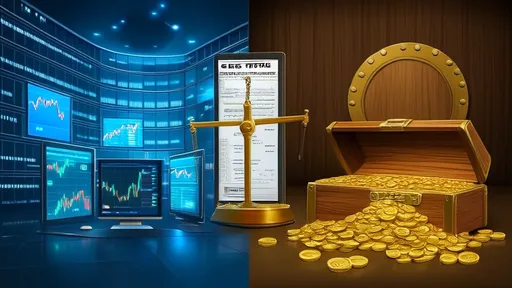
However, the path is fraught with pitfalls that would make a traditional equity analyst blanch. The market is notoriously opaque, with private sales and confidentiality clauses shrouding true transaction data. Liquidity is a constant concern; selling a masterpiece is not as simple as clicking a ‘sell’ button on a trading terminal. It requires time, the right venue, and a confluence of market appetite. Furthermore, the costs of ownership—insurance, secure storage, conservation, and transaction fees—can erode returns significantly, making it a game often best suited for the long term and the deep-pocketed.
Yet, the financialization of art continues apace, driven by innovation. Art investment funds pool capital from multiple investors to acquire a diversified portfolio of works, offering a way to mitigate the risk of putting all one’s capital into a single piece. Fractional ownership platforms, leveraging blockchain technology, are now dismantling the high barriers to entry, allowing individuals to own a share of a Blue-Chip painting for a modest sum. These technological and structural advancements are democratizing access and adding layers of liquidity and transparency previously unimaginable.
The role of data and analytics cannot be overstated. A new breed of firms now dedicates itself to tracking the art market with algorithmic precision. They analyze millions of past auction results, exhibition histories, and gallery trends to identify patterns and predict value trajectories. This data-driven approach provides a semblance of empirical grounding to a market often perceived as running on pure sentiment and connoisseurship. For the modern investor, these tools are becoming indispensable for navigating the complexities of the art asset class.
Ultimately, investing in art remains a unique hybrid endeavor. It requires a dual mindset: the cold, calculated eye of the financier and the cultivated intuition of the collector. The most successful players in this space are those who understand that the financial return is inextricably linked to the cultural capital an artwork holds. They aren’t just betting on canvas and paint; they are betting on history, reputation, and legacy. In this sense, art collecting becomes a profound statement, a fusion of economic ambition with a desire to partake in and preserve cultural dialogue.
As we look to the future, the integration of art into broader wealth management strategies will only deepen. It prompts essential questions about value, worth, and what we choose to invest in as a society. The masterpiece on the wall is no longer just a thing of beauty; it is a store of value, a statement of belief, and a sophisticated, if complex, financial instrument. The canvas, it seems, has finally met the balance sheet.
By /Aug 29, 2025

By /Aug 29, 2025
By /Aug 29, 2025
By /Aug 29, 2025

By /Aug 29, 2025

By /Aug 29, 2025

By /Aug 29, 2025

By /Aug 29, 2025

By /Aug 29, 2025

By /Aug 29, 2025

By /Aug 29, 2025
By /Aug 29, 2025

By /Aug 29, 2025

By /Aug 29, 2025

By /Aug 29, 2025

By /Aug 29, 2025

By /Aug 29, 2025

By /Aug 29, 2025

By /Aug 29, 2025

By /Aug 29, 2025
