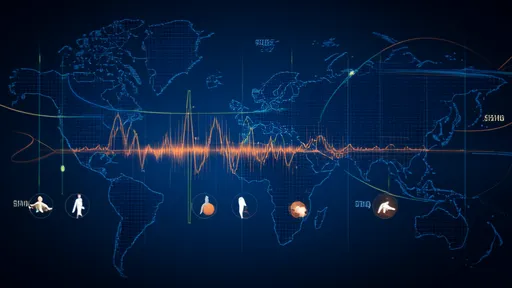
The concept of time zones was invented to bring order to our globalized world, yet our bodies stubbornly refuse to acknowledge these human-made boundaries. Crossing multiple time zones doesn’t just rearrange your schedule—it rewires your emotions, often in ways you least expect. The interplay between circadian rhythms and emotional volatility during long-haul travel is a phenomenon that frequent flyers know all too well, yet science is only beginning to unravel its complexities.
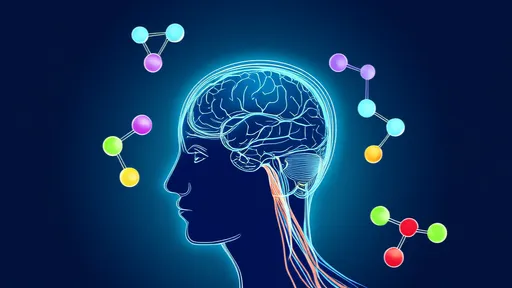
Jet lag isn’t just about fatigue. It’s a full-body mutiny where your hormones, neurotransmitters, and even gut microbiota revolt against the new temporal regime. When you cross into a time zone where daylight and darkness are inverted, your brain’s suprachiasmatic nucleus—the biological clock’s conductor—starts sending contradictory signals. Cortisol spikes at odd hours, melatonin production goes haywire, and suddenly, you’re crying over a mediocre airplane meal or laughing hysterically at a flight attendant’s routine safety demonstration. These aren’t just quirky travel anecdotes; they’re manifestations of a biochemical civil war.
The emotional rollercoaster follows a predictable yet poorly understood curve. During the first 12 hours post-arrival, many travelers experience a strange euphoria—a cocktail of sleep deprivation and novelty that mimics hypomania. This explains why business travelers make overly ambitious deals on arrival day, and why tourists insist they’ll "definitely learn the local language" before lunch. But as the body’s internal clock struggles to synchronize with external cues, this artificial high crashes into what chronobiologists call "the circadian trough"—typically hitting hardest between 3-5 AM in the new time zone. It’s in this liminal space that existential dread flourishes; studies show international travelers are 40% more likely to report intense homesickness or relationship doubts during this window.
Light exposure isn’t the only dictator of your post-flight mood. The direction of travel matters more than most realize. Eastward travel—where you "lose" time—triggers significantly higher rates of irritability and depressive symptoms compared to westward journeys. This aligns with research showing early risers (who adapt better to eastward shifts) tend toward anxiety, while night owls (who handle westward travel well) skew toward impulsivity. Your chronotype doesn’t just predict your ideal work schedule; it forecasts how you’ll emotionally weather a Tokyo-to-Paris red-eye.
Perhaps most fascinating is how time zone crossing amplifies pre-existing emotional patterns. Neuroimaging studies reveal that sleep-deprived brains show heightened activity in the amygdala (the fear center) while dampening prefrontal cortex function. In practical terms, this means your emotional baseline gets cranked up to eleven—if you’re prone to worry, expect full-blown catastrophizing; if you’re generally cheerful, prepare for inexplicable giddiness when tasting foreign snack foods. Airlines might want to consider emotional profiling alongside passport checks.
The recovery timeline follows biological rather than chronological rules. While conventional wisdom says it takes one day per time zone crossed, emotional recalibration lags behind physical adaptation. You might start sleeping through the night while still bursting into tears during local commercials. This disconnect explains why many travelers report feeling "not quite themselves" for weeks after returning home—a phenomenon researchers term "emotional jet lag." The implications are profound for global workforces; that "off" feeling during Zoom calls with overseas colleagues might be literal brain chemistry mismatches rather than cultural barriers.
Strategic light exposure can rewrite your emotional script. The latest protocols suggest timed light therapy should begin before boarding—yes, in your departure city—to preemptively nudge your circadian clock. Blue light glasses worn during specific flight phases can mitigate the emotional freefall of eastward travel, while carefully timed fasting (yes, skipping that inflight meal) appears to accelerate emotional stabilization. Some forward-thinking companies now provide "circadian adjustment playbooks" for frequent travelers, complete with personalized melatonin schedules and mood-mapping exercises.
As we enter an era of hyper-mobility, understanding these emotional tides becomes crucial. The businessman snapping at his team after a Dubai conference, the honeymooners fighting over nothing in Bali, the exchange student feeling suddenly adrift—these aren’t just bad moods, but biological inevitabilities written into our cells. The next frontier of travel tech might not be faster planes, but smarter ways to hack our ancient biology into peaceful coexistence with modern geography. Until then, maybe go easy on yourself (and others) when crossing those invisible lines in the sky.
By /Jul 16, 2025
By /Jul 16, 2025

By /Jul 16, 2025

By /Jul 16, 2025

By /Jul 16, 2025

By /Jul 16, 2025

By /Jul 16, 2025

By /Jul 16, 2025

By /Jul 16, 2025

By /Jul 16, 2025

By /Jul 16, 2025

By /Jul 16, 2025

By /Jul 16, 2025

By /Jul 16, 2025

By /Jul 16, 2025

By /Jul 16, 2025
By /Jul 16, 2025
By /Jul 16, 2025

By /Jul 16, 2025

By /Jul 16, 2025
