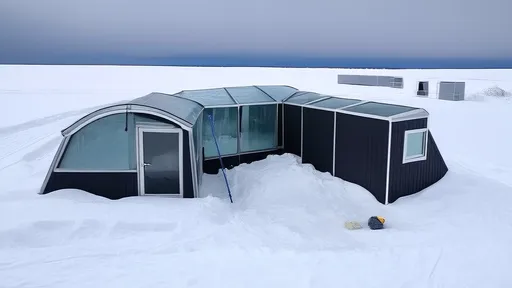
Bat Observation Tower: An Eco-Lodge for Pest Predators

Jul 16, 2025 By

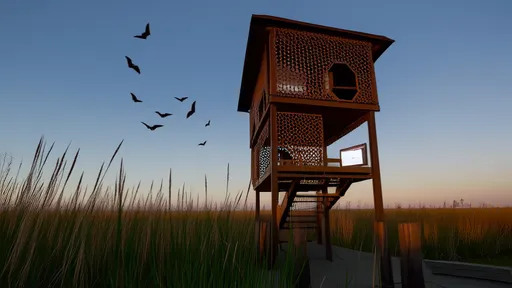
In the quiet hours between dusk and dawn, an unsung ecological drama unfolds around bat observation towers across the countryside. These unassuming structures, often resembling oversized birdhouses on stilts, serve as critical sanctuaries for nature’s most efficient pest controllers: bats. Far from being the dark creatures of folklore, these winged mammals are indispensable allies in sustainable agriculture and ecosystem balance. The concept of bat towers as "ecological hotels" for these nocturnal hunters is gaining traction among conservationists and farmers alike, offering a fascinating case study in human-wildlife coexistence.

The modern bat observation tower traces its origins to early 20th-century experiments, when Dr. Charles Campbell erected the first "bat roosts" in Texas to combat malaria by reducing mosquito populations. Today’s structures have evolved into sophisticated habitats that combine scientific monitoring with conservation. Unlike artificial bat boxes that accommodate small colonies, these towers—some reaching 9 meters tall—can house thousands of bats, their vertical design mimicking the crevices of cliff faces where many species naturally roost. The towers’ strategic placement near farmland creates a perfect symbiosis: bats get safe housing, while farmers benefit from reduced crop pests.

What makes these towers truly remarkable is their targeted ecological function. A single little brown bat (Myotis lucifugus) can consume up to 1,000 mosquitoes in an hour, while larger species like the Mexican free-tailed bat (Tadarida brasiliensis) prey on moths that damage cotton and corn crops. Research from the University of Tennessee suggests that bats provide pest control services worth an estimated $23 billion annually to U.S. agriculture alone. The towers enhance this natural service by concentrating bat populations where they’re needed most, creating localized "hotspots" of pest predation that reduce reliance on chemical pesticides.

The architecture of these structures reveals careful ecological consideration. Most feature rough interior surfaces that allow bats to cling easily, with chambers that maintain stable temperatures crucial for pup rearing. Some innovative designs incorporate guano collection systems at the base, transforming waste into premium organic fertilizer. The towers’ observation decks serve dual purposes: allowing researchers to monitor population health while giving visitors a rare glimpse into bat behavior through infrared cameras and ultrasonic microphones that translate echolocation calls into audible frequencies.

Bat towers face surprising challenges beyond their ecological benefits. Light pollution from nearby developments can disorient bats’ navigation, while pesticide residues accumulate in their systems through contaminated prey. Conservationists combat these issues by establishing buffer zones around towers and working with farmers to implement bat-friendly practices. Perhaps the most persistent hurdle is overcoming cultural prejudices—educational programs that showcase bats’ gentle nature and ecological importance have become integral to tower projects worldwide.

In Europe, bat towers are being adapted to protect endangered species like the greater mouse-eared bat (Myotis myotis). German conservationists have developed "bat bunkers"—modified WWII bunkers with regulated microclimates—that work in tandem with observation towers. Meanwhile, Southeast Asian projects focus on fruit bats critical for seed dispersal, with towers featuring larger landing platforms. This regional adaptation highlights the approach’s versatility across ecosystems and bat ecologies.

The towers’ value extends beyond agriculture into public health. As bats consume disease vectors like mosquitoes, some malaria-endemic regions report decreased infection rates near established colonies. This epidemiological benefit is driving interest in tropical zones, where modified tower designs account for higher rainfall and different predator pressures. In Costa Rica, towers constructed from local bamboo have proven particularly successful, blending traditional craftsmanship with modern ecological science.

Technology is revolutionizing bat tower monitoring. Automated infrared counters track comings and goings, while AI-powered audio analysis identifies species by their distinct echolocation signatures. Citizen science initiatives encourage locals to report observations via mobile apps, creating vast datasets that help researchers understand migration patterns and climate change impacts. Some towers now experiment with "bat-friendly" lighting—red LEDs that don’t disrupt nocturnal behavior—allowing for nighttime educational events.

Critically, these structures serve as arks amid habitat loss. As natural roosting sites disappear to deforestation and urbanization, bat towers provide essential refuges. Their success stories are measurable: a tower in California’s Central Valley saw its colony grow from 200 to 4,000 bats within five years, with nearby almond growers reporting 30% less moth damage. Similar results in Malaysian oil palm plantations demonstrate the model’s global applicability.

The future of bat observation towers looks toward integration with broader conservation networks. Some projects now link towers with wildlife corridors, while others incorporate renewable energy systems that power monitoring equipment via solar panels shaped to avoid disrupting flight paths. As climate change alters insect populations, the towers’ role as both shelters and sentinels will only grow—offering not just lodging for nature’s pest controllers, but hope for balanced ecosystems worldwide.

Recommend Posts
Travel

Reinforcing Travel Memories: The Neuroscientific Application of Olfactory Tags

By /Jul 16, 2025

The human brain has always been a fascinating subject for scientists, especially when it comes to memory formation and retrieval. Among the various sensory inputs that shape our recollections, smell stands out as a uniquely powerful trigger. Recent studies have begun to explore how scent can be used to enhance and even manipulate memories, particularly those tied to travel experiences. The concept of olfactory tagging—using specific scents to "label" memories—opens up exciting possibilities for both cognitive science and everyday life.
Travel

Stranger Empathy Experiment: In-Depth Conversations on Hard Seat Trains

By /Jul 16, 2025

In an age where digital interactions often replace face-to-face conversations, a fascinating social experiment has emerged from the unlikeliest of places: the hard-seat compartments of Chinese trains. Dubbed "The Empathy Experiment: Deep Conversations on Hard Seats," this grassroots movement has sparked unexpected connections between complete strangers, proving that meaningful human interaction can flourish even in the most mundane settings.
Travel

Coconut Fiber Slope Protection: Erosion Control Wall for Island Hotels

By /Jul 16, 2025

The turquoise waters lapping against pristine white sands have long been the postcard-perfect image of tropical island resorts. Yet behind this idyllic facade, a silent crisis is unfolding across many coastal properties. Rising sea levels and increasingly violent storm surges are gnawing away at the very foundations of luxury beachfront hotels, forcing architects and engineers to rethink traditional erosion control methods.
Travel

Huafu City Agreement: Thai Human-Monkey Coexistence Convention

By /Jul 16, 2025

In the heart of Thailand, the ancient city of Lopburi has long been known for its unique coexistence between humans and monkeys. The so-called "Monkey City" has recently formalized this relationship through the groundbreaking Lopburi Human-Monkey Coexistence Pact, a document that has captured international attention for its innovative approach to urban wildlife management.
Travel

Straw-made Emergency Stretcher: Instant Craftsmanship for Wetland Rescue

By /Jul 16, 2025

In the remote wetlands where modern medical equipment often fails to reach, an ancient craft has emerged as an unlikely lifesaver. Across flooded marshes and treacherous bogs, responders are reviving the art of woven grass stretchers – a sustainable solution born from necessity. These pliable yet sturdy carriers, fashioned from reeds and wild vines, represent a fascinating intersection between traditional knowledge and emergency innovation.
Travel

Paper Bridge Challenge: The Art of Folding for Load-bearing Structures

By /Jul 16, 2025

The art of paper bridge construction has long fascinated engineers, artists, and educators alike. What begins as a simple sheet of paper transforms into a structural marvel capable of bearing surprising loads. This delicate balance between fragility and strength lies at the heart of the paper bridge challenge, where participants push the boundaries of material science through creative folding techniques.
Travel

Star Navigation Course: Constellation Positioning Without GPS

By /Jul 16, 2025

For centuries, humans have looked to the stars for guidance. Long before the invention of GPS or even the compass, ancient mariners and travelers relied on celestial navigation to traverse vast oceans and uncharted territories. The art of finding one’s way by the stars is not just a relic of the past—it remains a vital skill for adventurers, sailors, and even those who simply wish to reconnect with the natural world. This article explores the timeless practice of celestial navigation, focusing on how to locate and use constellations as a guide when modern technology fails.
Travel

Wilderness Fire-Making Certification: Fire-Starting Techniques in Different Humidity Conditions

By /Jul 16, 2025

The art of building a fire in the wild is as ancient as humanity itself, yet it remains one of the most critical survival skills. Among the many factors that influence fire-making success, humidity stands out as both a formidable adversary and a subtle ally. Understanding how to adapt your techniques to varying moisture levels can mean the difference between warmth and misery, between a cooked meal and hunger, between signaling for rescue and going unnoticed.
Travel

Lost Value Theory: Cognitive Research on Serendipitous Discoveries

By /Jul 16, 2025

The concept of serendipity has long fascinated scholars, artists, and scientists alike. Defined as the occurrence of valuable discoveries by accident, serendipity challenges our traditional understanding of research and innovation as purely methodical processes. Recent cognitive studies have begun to unravel how the human mind navigates unexpected findings, transforming chance encounters into meaningful breakthroughs. This emerging field, often referred to as the theory of lost value, examines why some individuals capitalize on accidental discoveries while others overlook them entirely.
Travel

Bat Observation Tower: An Eco-Lodge for Pest Predators

By /Jul 16, 2025

In the quiet hours between dusk and dawn, an unsung ecological drama unfolds around bat observation towers across the countryside. These unassuming structures, often resembling oversized birdhouses on stilts, serve as critical sanctuaries for nature’s most efficient pest controllers: bats. Far from being the dark creatures of folklore, these winged mammals are indispensable allies in sustainable agriculture and ecosystem balance. The concept of bat towers as "ecological hotels" for these nocturnal hunters is gaining traction among conservationists and farmers alike, offering a fascinating case study in human-wildlife coexistence.
Travel

Salt Block Church: Architectural Wonder of Mineral Crystals

By /Jul 16, 2025

Deep beneath the earth's surface, where geological forces conspire to create wonders beyond human imagination, lies an architectural phenomenon that defies conventional construction – the salt brick churches carved from mineral crystallization. These subterranean sanctuaries, hewn from halite deposits over centuries, stand as testaments to nature's patient artistry and humanity's spiritual yearning.
Travel

Rammed Earth Lodge: Modern Seismic Retrofitting with Traditional Materials

By /Jul 16, 2025

In the rugged mountains of southern China, a quiet revolution in sustainable architecture is taking root. The humble rammed earth hostel, once considered a relic of rural poverty, has been reimagined as a model of seismic resilience and ecological design. These structures, built from the very soil beneath their foundations, are challenging conventional wisdom about both traditional building techniques and modern earthquake preparedness.
Travel

Elephant Protection Farm: Blocking Poaching Routes with Chili Fields

By /Jul 16, 2025

In the ongoing battle against elephant poaching, conservationists in Africa have developed an innovative natural deterrent that's both effective and sustainable – chili pepper farms. Across several elephant ranges in Zambia and Zimbabwe, sprawling fields of fiery chilies are being strategically planted to create buffer zones between wildlife habitats and human settlements.
Travel

Subway Pigeon Whistle: London Rail Bird Repulsion System

By /Jul 16, 2025

The familiar screech of wheels against steel rails is a sound most London commuters know all too well. But beneath the cacophony of the Underground, another sound has emerged – one that feels almost out of place in the heart of the city. The high-pitched warble of bird calls echoes through tunnels and platforms, a deliberate intrusion into the mechanical symphony of the Tube. This is no avian invasion, however. It's a carefully engineered solution to an age-old urban problem: pigeons in the metro.
Travel

Stray Cat Tourism Bureau: Health Management of Cat Island Residents

By /Jul 16, 2025

The sun dips below the horizon, casting long shadows across the narrow alleys of Tashirojima, where feline residents stretch and yawn with the casual authority of tiny governors. Known globally as "Cat Island," this sliver of land in Miyagi Prefecture has become an unlikely case study in community health management—where the primary citizens walk on four paws and demand tribute in the form of ear scratches. The so-called "Tourism Bureau for Stray Cats," a whimsical yet deadly serious collective of local volunteers and veterinarians, has quietly revolutionized how we think about animal welfare in human-dominated spaces. Their approach isn’t about control, but coexistence—a philosophy that’s rewriting the rules of public health for species who’ve never read a medical textbook.
Travel

Deciphering Hiker's Code: The Secret Language of Piles of Pebbles

By /Jul 16, 2025

In the remote corners of the world, where trails fade into wilderness and GPS signals falter, a silent language of stones speaks volumes. Seasoned hikers and clandestine travelers have long relied on subtle arrangements of rocks to mark paths, warn of danger, or leave messages for those who follow. These unassuming cairns and scattered stone patterns form what adventurers now call “hiker’s rubble code”—a cryptic communication system etched into the landscape itself.
Travel

Luggage Detachment: The Test of Stripping Away Items and Security

By /Jul 16, 2025

In an era where minimalism has become more than just a trend, the concept of luggage decluttering presents a fascinating psychological experiment. The act of stripping down one's belongings to the bare essentials before a trip forces travelers to confront their deepest attachments and insecurities. What begins as a practical exercise in packing efficiency often reveals unexpected truths about our relationship with material possessions.
Travel

Biorhythm Curve of Jet Lag

By /Jul 16, 2025

The concept of time zones was invented to bring order to our globalized world, yet our bodies stubbornly refuse to acknowledge these human-made boundaries. Crossing multiple time zones doesn’t just rearrange your schedule—it rewires your emotions, often in ways you least expect. The interplay between circadian rhythms and emotional volatility during long-haul travel is a phenomenon that frequent flyers know all too well, yet science is only beginning to unravel its complexities.
Travel

Mycelium Furniture: Hotel Supplies Made from Mushroom Materials

By /Jul 16, 2025

In a world increasingly focused on sustainability and innovative materials, mycelium-based furniture and hotel amenities are emerging as a groundbreaking alternative to traditional manufacturing. This fungal fabrication revolution isn't just about being eco-friendly—it represents a fundamental shift in how we conceive of everyday objects. Designers and hospitality brands are now collaborating with biologists to grow everything from lampshades to entire chair frames using the intricate root networks of mushrooms.
Travel

Building Snow Toilets: A Leave-No-Trace Solution for Extreme Cold Environments

By /Jul 16, 2025

The vast white expanse of snow-covered wilderness presents unique challenges for outdoor enthusiasts and researchers alike. Among the most pressing yet least discussed is the question of human waste management in extreme cold environments. Traditional sanitation solutions fail in subzero conditions, while environmental concerns demand innovative approaches that leave no trace.